Property managers can make life so much easier for condo boards and residents in the building, so we selected 10 noteworthy management companies based on client feedback, experience, credentials, public reviews, and industry reputation.
Top 10 companies
- ICON Property Management
- Maple Ridge Community Management
- CityTowers Property Management
- Percel Inc.
- Wilson Blanchard Management
- Melbourne Property Management
- Forest Hill Kipling
- GPM Management
- Del Property Management
- FirstService Residential
How to choose the right management company for your condo

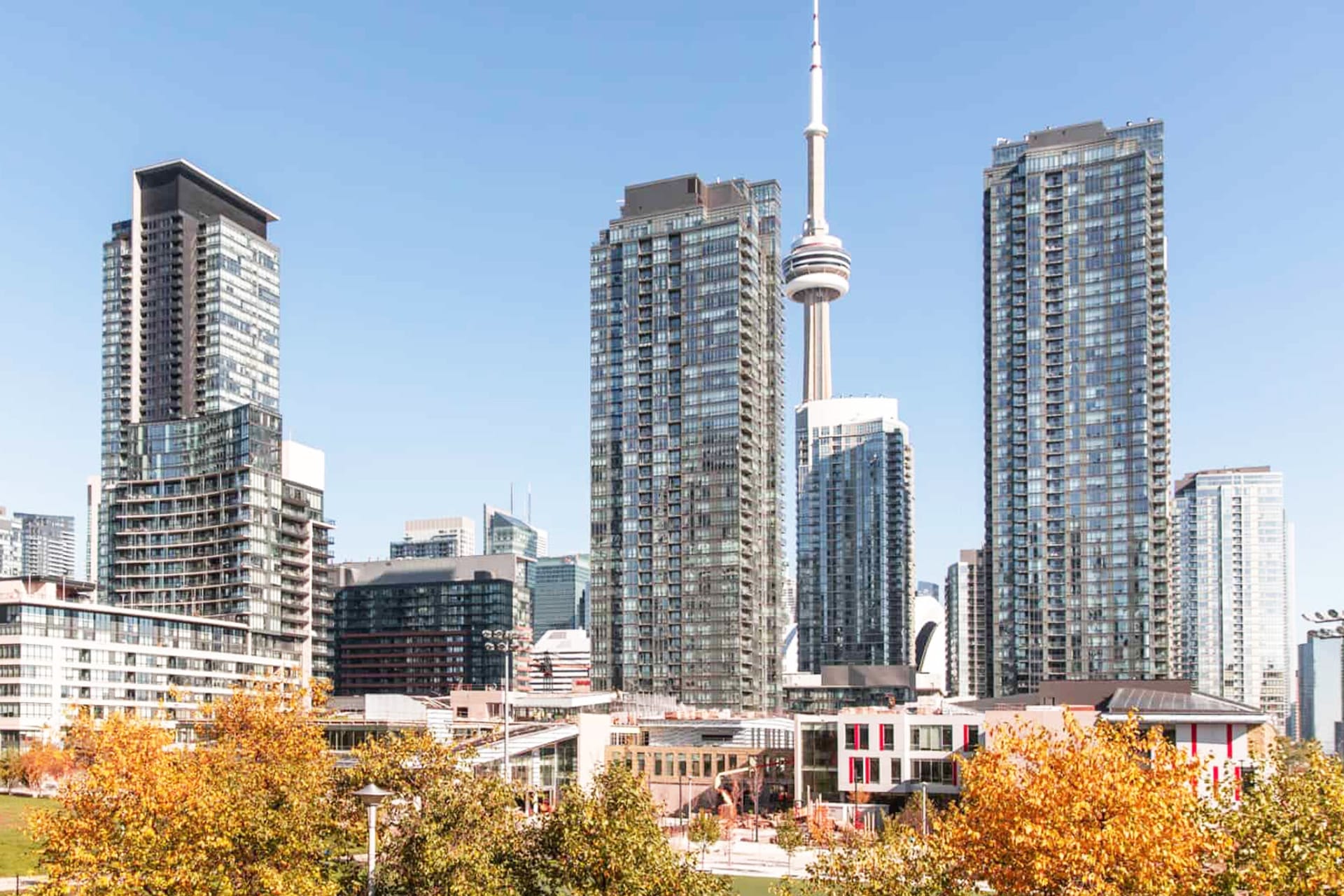
Comparing condo management companies in Toronto isn’t quite the same exercise as comparing them anywhere else in Ontario. This market has its own quirks: the age and shape of its buildings, the pace of new construction, and even how corporations get registered. Each of those quirks changes what your board should actually be screening for. Here are some things to consider in the screening:
Building height and age
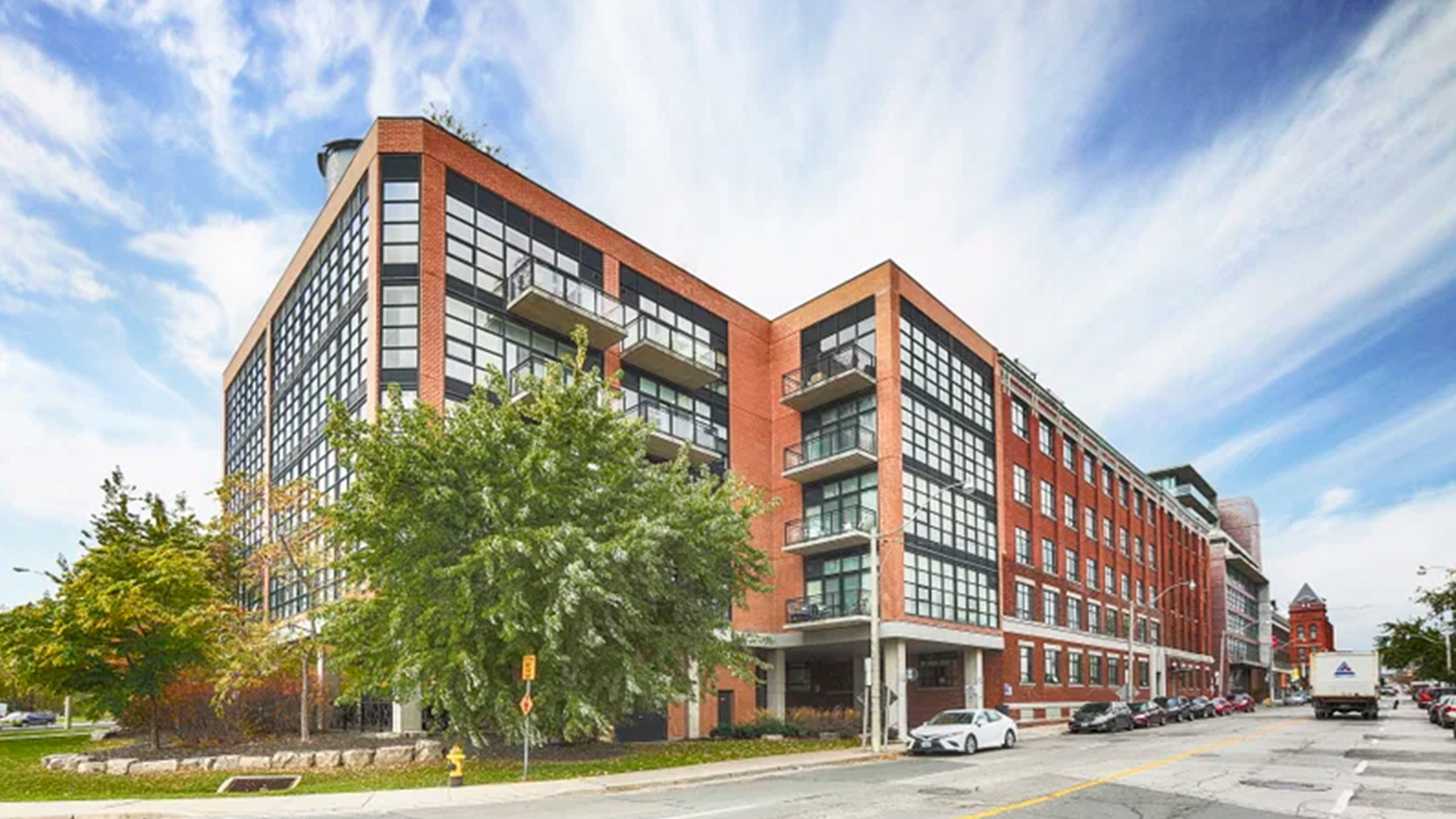
Toronto’s had high-rises since the 1960s, so there’s decades of data on what an older brick-and-precast tower needs. Newer glass curtain-wall towers are a different story, and the reserve fund industry is still catching up on their long-term maintenance needs. A company strong in small, older buildings isn’t automatically right for a 50-story tower, and vice versa. Ask what percentage of a company’s buildings are high-rise, and how many towers over 30 stories they manage right now.
Capital planning
Toronto’s construction boom has slowed, so more of the existing stock is heading into expensive repair years at once, without new construction competing for the same contractors. A management company’s actual skill at capital planning matters more in a market like this than it did during the boom, when a fast-growing client list could make a company look successful even without particularly strong long-term forecasting
“GTA-wide” isn’t always “Toronto”
Toronto buildings carry TSCC or MTCC registration numbers; neighboring regions run separate registries. Plenty of companies market themselves as serving “the GTA” while managing mostly buildings outside city limits. Ask what share of a company’s portfolio is genuine Toronto corporations.
Licensing
CMRAO licenses are public record. Before shortlisting anyone, confirm that both the company and the specific manager they’d assign are properly licensed, and check for disciplinary history.
Pricing
Pricing isn’t published by any company on this list, so expect a custom quote scaled to your building’s size and needs once someone has actually walked the property.
1. ICON Property Management
ICON is Toronto-headquartered (Etobicoke, since 1995), unlike most larger competitors, which run out of Markham or Mississauga. It now supports roughly 40,000 residents across the GTA and Southwestern Ontario. It quotes 60-90 days to transition a building over from an incumbent manager, which is actually a useful benchmark to hold every shortlisted company to, since a much shorter timeline can mean nobody’s doing the unglamorous work of reviewing reserve fund history first.
ICON has held ACMO 2000 certification since 2013, with periodic re-audits. Worth understanding the distinction that comes up throughout this list: a CMRAO license confirms an individual manager met the province’s minimum standard; ACMO 2000 reflects the financial controls and governance underneath that person.
One protects you when your manager is good; the other protects you when they leave. In February 2025, ICON completed a CMRAO records-management audit with no directives issued, which is a clean, recent track record.
Reputation
ICON holds 4/5 stars across 488 Birdeye reviews, which is solid on a meaningful sample. A smaller Yelp sample shows the same split as most companies here: a named manager praised for responsiveness, alongside a billing dispute over a pool renovation and delayed repairs at a different building.
Bottom line
Great company, but ask specifically who would be assigned to your building before signing.
2. Maple Ridge Community Management
MRCM is the Ontario branch of Associa, North America’s largest community-management company (275+ branches, 6.5 million+ residents served). That scale cuts both ways: deeper backup and vendor relationships, but a tendency in larger organizations to push decisions up a chain rather than leaving them with your on-site manager. It’s then worth asking how much authority your manager would actually have.
Locally, MRCM has operated in Ontario since 1984, running 300+ condo corporations with 100+ full-time staff from a Mississauga head office, and has taken more than 40 new corporations through the high-risk post-registration period, negotiating warranty and Tarion claims with the builder.
The company is ACMO 2000 certified, and in 2023, MRCM became the first Ontario provider approved by CMRAO to deliver the Continuing Professional Education credits now required of every licensed manager in the province.
Reputation
On Birdeye, MRCM holds 4.⅖ across 1,941 reviews. On BBB, despite full A+ accreditation, its customer review average is just 1.69/5 across 336 reviews. Both can be true at once. BBB’s grade reflects how formally filed complaints get resolved, not day-to-day resident sentiment. The recurring complaints, such as slow communication, delayed repair follow-through, and billing disputes, show up in some form across nearly every large management company in this city, and usually reflect how a request travels internally rather than nobody caring.
Bottom line
A great option for boards that want a major North American network’s resources and newer buildings still in their first years post-registration. But as with other large operators, ask for references from buildings that match yours in size.
3. CityTowers Property Management
CityTowers was founded in 2007 by George Shalamay, who remains President and CEO. The company is headquartered in Mississauga, where roughly 70% of its portfolio sits, with the rest spread across Toronto, Oakville, Burlington, and Hamilton. It manages 5,400+ units and $2.2 billion+ in assets with a 28-person team. That means fewer buildings per employee than the larger names on this list, which translates to more attention per building.
Reputation
One story is worth knowing: CityTowers caught a metering error at a gas utility supplying one of its buildings, nine months of overbilling totaling $516,000, and escalated to regulators until the utility credited the building $544,000. On reviews, it sits at 4.⅖ across 102 Google reviews tied to its Mississauga office.
Bottom line
Unlike every other company on this list, CityTowers doesn’t point to ACMO 2000 certification or cite a specific CMRAO license in its own marketing. It’s legally required to hold one regardless, so my guess is that all is good. Other than that, this company is great for boards that want a small, senior team who’ll know your building.
4. Percel Inc.
Percel was incorporated in 1974 by the late Paul “Percy” Weinberg and took on its first contract in 1976. It’s now run by his successor, Robert Weinberg, alongside VP Andrew Nyman. Robert Weinberg is himself a past ACMO President. Beyond Toronto, Percel’s North division manages properties in Blue Mountain, Collingwood, Thornbury, and Muskoka.
Reputation
Percel Inc. sits around 3.9 stars across 450 ratings on Birdeye. Its BBB file holds an A+ rating despite not being accredited. Worth knowing: in a 2024 Globe and Mail story on a different Ontario manager losing his license over a reserve-fund crypto scheme, Robert Weinberg approved of that outcome. That makes you know how the CEO feels about management skill and discipline.
Bottom line
The company is the best option for resort or cottage-country corporations, rather than a standard urban high-rise.
5. Wilson Blanchard Management
Wilson Blanchard Management was founded in 1995 by Ray Wilson and David Blanchard, who brought a combined 60-plus years of property management experience to the venture. What matters more for a board evaluating them today is what happened in 2017: Wilson Blanchard became part of Associa, the largest community management company in North America. Associa runs more than 300 branch offices, serves upward of 7.5 million residents, and employs close to 19,000 people across the continent. That’s a different resource base, which is real leverage on vendor pricing, standardized systems, and backup depth if a manager is out sick or leaves. It also means that, structurally, local decisions ultimately sit underneath a much larger US-based parent, which is worth knowing even if it rarely shows up day to day.
Reputation
On the ground, Wilson Blanchard serves more than 55,000 condo unit owners daily out of offices in Cambridge, Hamilton, St. Catharines, and Toronto, with a footprint spanning the GTA, the Golden Horseshoe, Niagara, and Kitchener-Waterloo. On leadership, President Jeff Lack holds his CPA and CGA designations, and senior vice president Sandy Foulds, who is a nearly 30-year veteran of the company, was elected president of the Canadian Condominium Institute’s Golden Horseshoe Chapter in 2021, a great regional credential.
Bottom line
Client reviews land in solidly positive territory. For example, on Google, the company holds a 4.4-star rating out of 452 reviews. Also, the company is BBB accredited, with an A+ rating. But I suggest you ask about average manager tenure at Wilson Blanchard, company-wide, not just at your specific building.
6. Melbourne Property Management
Melbourne is a Toronto-based firm that leads with team tenure (100+ combined years of industry experience) rather than portfolio size, which isn’t published. That means you’ll need to ask for the current building count and staff-to-building ratio. Its real specialty is new construction: close to three decades consulting with Ontario developers, managing interim occupancy, and the handover from developer control to an owner-elected board, a different skill set than running an established building. The company is in good standing with CMRAO, a member of ACMO and BILD, and carries errors-and-omissions and fidelity insurance.
Reputation
Melbourne won the Toronto Star’s 2023 Readers’ Choice Diamond Award. Its review base and BBB profile run thin, which is consistent with a smaller, boutique operation rather than a red flag.
Bottom line
Strongest fit if your corporation is newer or still working through its first turnover, but less proven as a general-purpose fit for an older, stable building.
7. Forest Hill Kipling
Forest Hill Kipling is a pairing of two specialists rather than one company that grew organically. The Kipling Group (founded in 2007 by Richard Geurts and Stephen Lewis, 30+ years each in the industry) supplies financial reporting, compliance, and building operations; the Forest Hill Group (serving clients since 2001) supplies the hospitality layer of concierge, valet, security, and in-suite cleaning. The contracting entity on paper is Kipling Residential Management Inc.
The client roster does the talking: Nobu Residences (700 suites across two 49-story towers), Sixty Colborne (a 252-unit LEED-certified tower), and, since a 2019 acquisition, Great Gulf’s Balance Residential portfolio, extending a relationship tracing back to One Bloor.
Reputation
Forest Hill Kipling has the thinnest public review trail on this list. It’s not automatically a red flag for a boutique operation serving a small number of high-end buildings, but it does mean less independent data to lean on.
Bottom line
This is a firm built for the top end of the luxury market, not general-purpose administration. Ask for two or three current client references and call them. Pricing isn’t published, but expect it to run above standard fees because of the dedicated hospitality layer.
8. GPM Management
GPM has been in business since 1971, putting it among the longer-tenured names on this list. Headquartered in Concord, the firm now manages more than 120 high-rise condominium buildings and townhouse complexes across the GTA, which points to steady, organic growth rather than a sudden acquisition-driven jump.
Reputation
The strongest piece of evidence in GPM’s favor is a third-party judged result. YCC216, known publicly as Crestview Place, won the Canadian Condominium Institute’s Toronto and Area Chapter Condo of the Year award for 2025, earned specifically for the board and management’s long-term financial discipline and a thorough preventative maintenance program.
It’s not a one-off, either: a different GPM-managed property, Landmark II of Thornhill, took an Honorable Mention as runner-up in an earlier year’s competition. Two independently judged recognitions across two different buildings are a more meaningful signal than almost anything a company can say about itself.
Bottom line
GPM sits at a 4-star average across 233 reviews on Birdeye. On Google, the company holds a 4.2-star rating out of 228 reviews. Although the company is not BBB accredited or rated, it doesn’t have any complaints on BBB, which is something rare.
9. Del Property Management
Del has managed Toronto condos since 1968, a year after Ontario’s Condominium Act took effect. It has now grown to 90,000+ suites across 300+ GTA communities, including many Tridel-built towers. REMI Network ranks it third among all Canadian condo managers by suite count.
Reputation
Birdeye, pulling mostly from Google reviews, puts Del at 2.8/5 across 585 reviews, a large enough sample that it isn’t a handful of outliers, and lower than the company’s scale would suggest. The complaints point less to one scandal and more to inconsistency. One Yelp review described three different property managers and three different superintendents rotating through a single building within one year. On the positive side, Del holds a 2026 GTA Consumer Choice Award.
Bottom line
Del’s scale and standing aren’t in question, but the real diligence happens at the building level. Ask who would actually run your property, how long they’ve been with Del, and what else is on their plate. But generally, this company is best for boards prioritizing deep Toronto tenure and scale.
10. FirstService Residential (Following the Crossbridge Acquisition)
FirstService Residential acquired Crossbridge Condominium Services in April 2023. The announcement confirmed that Crossbridge President Sandro Zuliani and his management team would continue leading day-to-day operations. This preserved continuity at the leadership level, although it did not guarantee that every building would permanently retain the same individual property manager. In practice, much of Crossbridge’s team and operating experience continued within the larger FirstService Residential organization.
The combined Ontario operation now reports more than 1,500 associates serving over 900 communities and 150,000 units. Zuliani remains listed as President of Crossbridge, while several longtime Crossbridge executives now hold senior roles within FirstService Residential Ontario. Both FirstService Residential and Crossbridge also remain separately listed in ACMO’s current ACMO 2000 Certified Registry.
Reputation
At the time of checking, FirstService Residential’s North York Google listing showed 3.6 stars across 884 reviews. That is a substantial review base and points to mixed customer sentiment, although it represents one office listing rather than every FirstService-managed property in Ontario. Boards should therefore request references from buildings handled by the specific manager and regional team being proposed.
Bottom line
FirstService Residential combines the scale and support systems of a major operator with much of Crossbridge’s established Ontario leadership and experience. The company is a strong option for boards that value deep staffing and centralized resources, but service will still depend heavily on the assigned property manager. Ask who will manage your building, how many other properties they handle, and how long the proposed team has worked together.
Self-managed vs. professionally managed
Before finalizing a shortlist, it’s worth asking whether your board needs to hire one of these companies at all. Ontario law allows a board to self-manage, but only within a specific line: directors and officers are exempt from CMRAO licensing as long as they aren’t compensated for the management work itself.
Plenty of smaller, well-organized corporations manage themselves successfully year after year. And what has changed the game to the advantage of self-management is that the infrastructure advantage professional management used to hold (one system tracking every request, payment, and violation instead of scattered email threads) is now available directly to self-managed boards, too.
Final thoughts
When hiring, I always suggest you start by confirming the licensing. A CMRAO license confirms an individual manager met the province’s minimum bar, and ACMO 2000 confirms the company behind them has real financial controls in place. CMRAO’s public registry is free; you just check for any company on your list.
Then check the reviews. The pattern underneath matters more than any single rating. For example, you might find the company itself is solid, but the specific manager assigned to a given building is “another story.” You’re not just hiring a brand. You’re hiring a person, backed by however much support that company gives them. Ask by name who would be managing your building, and how many other properties they’re juggling.