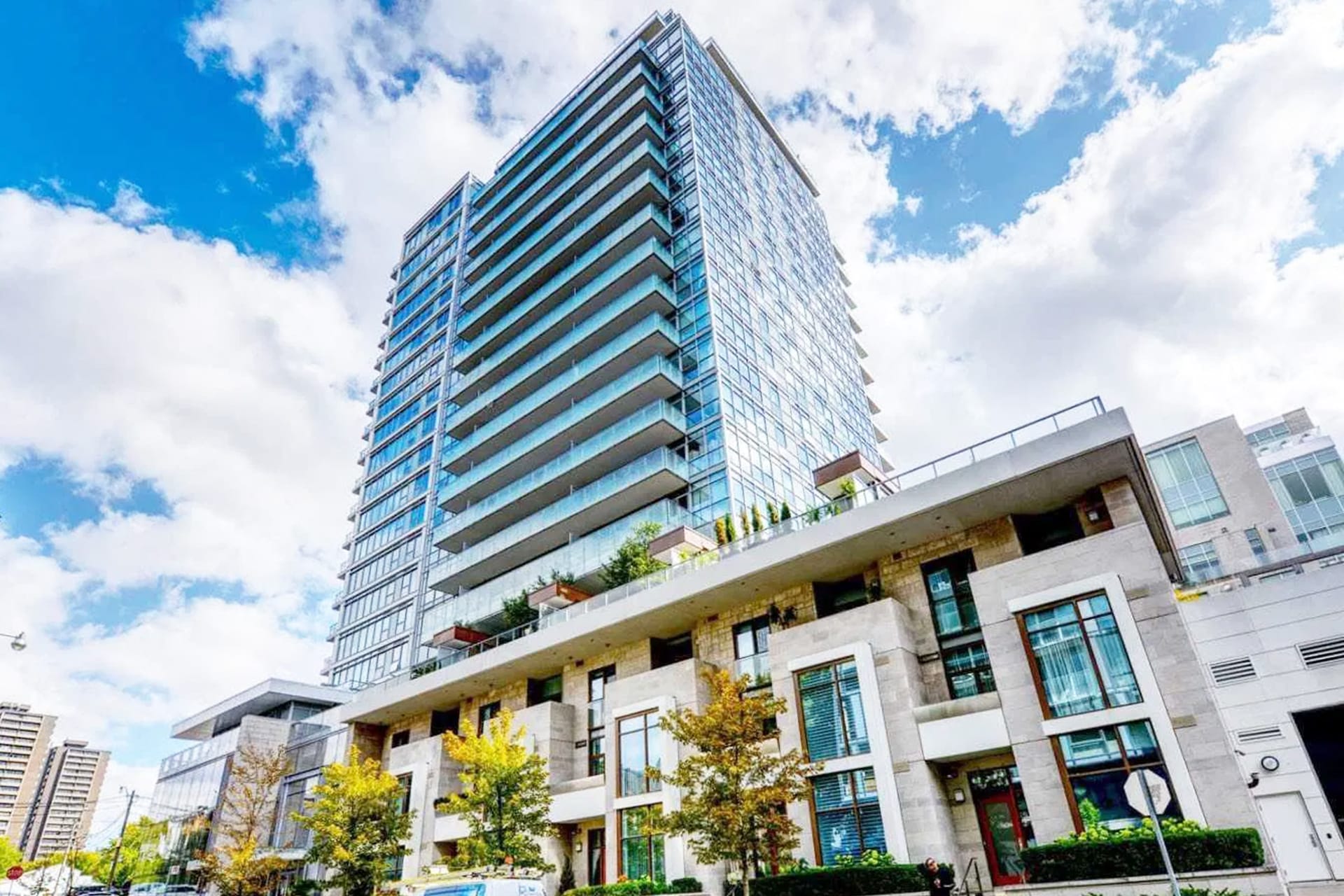
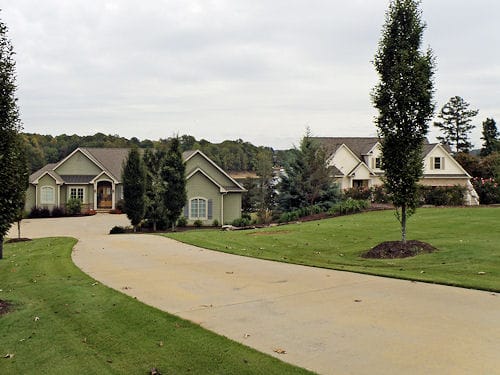
Roughly 74 million Americans now live in HOA-governed communities, and homeowners increasingly expect the same frictionless digital experience for paying their dues that they get everywhere else in their lives. As a result, online payments have become a standard for most HOA communities.
These platforms give your residents personalized payment portals, automated billing reminders, and real-time payment tracking. For the management, the benefits are fewer late payments, cleaner financial records, and less administrative burden on your team. But here’s where it gets complicated. HOA payments involve lots of money, with HOAs having collectively collected $120.9 billion in member assessments in 2024 alone. Now the question becomes: what’s the actual cost of collecting these monies online?
And just to show you how important this matter is to HOA boards, in a webinar we hosted, payment fees generated more than 20 separate Q&A exchanges among attendees, making it the second-most discussed topic of the entire session, right behind QuickBooks integration. The volume of those questions tells you most boards know fees exist, but very few have a complete picture of what those fees actually cost.
Almost every conversation about HOA payment fees eventually narrows down to two methods: credit card and ACH. Each comes with its own fee structure, its own trade-offs, and its own implications for your association’s budget and your residents’ experience. Some communities absorb the cost entirely as a homeowner-friendly gesture. Others pass it along as a convenience fee. Many are still trying to figure out which approach makes the most sense. If your board is somewhere in that spectrum, keep reading.
Credit card fees explained

When a homeowner pays their dues through your online portal with a credit card, that transaction doesn’t just travel directly from their account to your association’s bank. It moves through multiple parties, such as the payment processor, the card network, and the issuing bank, and each one takes a piece before the money arrives on your end. Here’s what that fee structure actually looks like:
The three layers of credit card processing costs
Every credit card transaction you accept carries three components baked into the total fee:
- The interchange fee: Interchange fees account for 70% to 90% of your total processing cost, and they’re set by the card networks (Visa, Mastercard, Discover, American Express). For example, Visa interchange rates run from 1.15% + $0.05 up to 2.40% + $0.10 per transaction. Mastercard spans 1.45% + $0.05 to 2.90% + $0.10. You don’t negotiate these.
- The assessment fee: This is the card network’s cut for letting you use its infrastructure. It’s small and also non-negotiable: Visa charges 0.14%, Mastercard charges 0.14% (or 0.15% on transactions over $1,000), Discover charges 0.13%, and American Express comes in at 0.165%.
- The processor’s markup: This is the only part of the fee that’s actually negotiable. It’s what your payment platform charges on top of the base cost to handle the transaction on their end.
Flat rate vs interchange-plus
Most HOA payment processors package these three components into one of two pricing models: flat rate and interchange-plus. Flat-rate pricing bundles everything into a single percentage, around 2.9% + $0.30 per transaction. It’s simple and predictable, which is why many platforms default to it.
During our webinar, one attendee mentioned they’d been quoted 2.9% plus 80 cents per transaction by their processor, and that’s a variation you’ll encounter more often in HOA and property management platforms. The higher fixed component (80 cents instead of the common 30-cent baseline) reflects the fact that HOA transactions tend to be large, which makes a steeper flat fee more profitable for the processor.
Interchange-plus pricing is more transparent. The processor passes along the interchange cost and adds a clear, fixed markup on top, something like interchange + 0.4% + $0.08. You can see exactly what you’re paying for at each layer.
Why online payments cost more
Here’s something that surprises a lot of CAMs: when your residents pay through your portal by typing in their card number rather than swiping in person, you’re automatically paying the premium rate. These “card-not-present” transactions carry higher fees because the fraud and data-error risk is higher. In-person card processing runs between 1.5% and 2.0%. For online payments, you’re looking at 2.25%-2.50% or higher as the baseline.
The rewards card problem
There’s one more variable: not all credit cards cost the same to process. When a homeowner pays with a premium travel rewards card or a cash-back card, the interchange fee on that transaction is higher than it would be on a standard card.
Rewards programs are largely funded by those higher interchange fees, which means your association is quietly subsidizing your homeowners’ airline miles without any way to predict or control it. On a tiered pricing plan, rewards cards can run two to three times higher than standard card transactions.
What these fees actually cost your association
On a routine $300 quarterly due at a 3% processing rate, you’re paying $9 per transaction. In a community of 200 homeowners paying quarterly by credit card, that’s $7,200 a year in processing fees on dues collection alone. And that’s before a single special assessment hits.
Now take a $5,000 special assessment, the kind your board levies after a roof replacement or a surprise infrastructure failure. At 3%, you’re absorbing $150 in fees on one transaction, from one homeowner. Then multiply that by 200 homeowners.
ACH fees explained
If you’ve ever received a direct deposit, paid a mortgage automatically, or had a utility bill pulled straight from your checking account, you’ve used ACH. It’s the backbone of routine bank-to-bank money movement in the United States, and it’s exactly what happens behind the scenes when a homeowner pays their dues from a checking account through your online portal.
The network is administered by Nacha and processes roughly 35 billion transactions per year, totaling over $93 trillion in value. HOA dues collection fits naturally into this model because it mirrors the same recurring, predictable structure as mortgage payments and utility bills.
The critical difference from a cost standpoint is that ACH bypasses the card networks entirely. No Visa. No Mastercard. No interchange fees. No assessment fees. Funds move directly between banks, which eliminates the entire fee stack that makes credit card processing so expensive.
What does ACH actually cost?
Instead of a percentage that scales with every dollar collected, ACH charges a flat fee or a low percentage with a cap. The 2022 AFP Payments Cost Benchmarking Survey put the average ACH transaction cost between $0.26 and $0.50 per transaction. This tracks closely with what HOA managers are actually seeing.
In the webinar, one attendee mentioned their community pays just 25 cents per ACH transaction through their bank, a rate at the lower end of the benchmark and a reflection of what’s achievable when you’re banking directly with an institution that understands community association payment volumes.
Why ACH is the natural fit for HOAs recurring dues
Think about what HOA dues are: a fixed, recurring obligation that homeowners are contractually required to fulfill on a predictable schedule. That description fits ACH autopay. When a homeowner enrolls, their payment is automatically withdrawn on the due date. There’s no login required, no manual action, and no “I forgot” scenarios. The payment just happens.
For you as a CAM, that automation addresses one of the most persistent headaches in community financial management: delinquency. Recurring ACH payments create consistent, predictable cash flow, which makes budgeting cleaner and reserve planning more reliable. ACH also carries significantly lower chargeback risk than credit cards.
Negotiating for bank-level pricing
Here’s something most communities don’t realize: ACH pricing isn’t fixed. It’s negotiable, and your transaction volume is your leverage. Many ACH providers offer tiered pricing where per-transaction fees drop once you cross certain volume thresholds. If you’re managing multiple communities under one management company, this works significantly in your favor.
The aggregated monthly transaction volume across your entire portfolio gives you bargaining power that a single self-managed HOA couldn’t access independently. At the high end of the volume scale, you can bring ACH costs down to around $0.15 per transaction.
Some community association banks go even further to offer free recurring ACH with no enrollment or transaction charges, making dues collection a near-zero-cost exercise for both the association and the homeowner when ACH is the payment method. And while at it, let me address a concern raised during our webinar. An HOA with low monthly dues asked whether something like Venmo could work as a workaround to avoid processor fees altogether.
The honest answer is no. Consumer P2P apps aren’t built for HOA collections. They lack the audit trails, reconciliation tools, and formal payment authorization structures that association accounting requires. For communities where mainstream processor fees feel disproportionate, the better path is a community association banking relationship or a purpose-built HOA management platform. Both are designed to bring ACH costs down to a workable level.
Pass fees to residents or absorb them?
Once your board enables online payments, this question surfaces almost immediately. When a homeowner pays by credit card, and the processor takes 2.5% to 3.5%, who absorbs that cost? In our webinar, this came up in at least two separate Q&A exchanges. Attendees asked whether fees can legally be passed to residents or whether the HOA is required to absorb them.
There is no default answer. But the fact that it came up more than once tells you something: many board members assume absorption is mandatory, when in reality it’s simply the path of least resistance that no one has revisited. Here’s how to think through both sides.
The case for absorbing fees: pros
The argument is straightforward: when homeowners log in and see no additional charge, the payment experience is seamless. And a seamless experience directly serves the association. Fewer friction points mean more on-time payments, fewer delinquencies, and less administrative follow-up.
Some management companies build fee absorption into their service model entirely, partnering with their banking provider to cover transaction costs as a philosophy of convenience. Their reasoning: the shift away from paper checks alone justifies the cost, given the processing time, error rate, and handling involved in manual payment collection. If removing every obstacle to payment is the goal, absorbing fees is the cleanest path to get there.
The case for absorbing fees: cons
The problem is the math that compounds with community size. Go back to that 200-home community with $300 monthly dues. If 60% of homeowners pay by card, you’re absorbing roughly $1,080 per month in processing fees. That’s around $13,000 a year that isn’t going toward landscaping, reserves, or maintenance, but going to the payment processor.
The case for passing fees to residents: pros
Passing processing costs to homeowners through a disclosed convenience fee keeps every dollar of dues intact and flowing where it’s supposed to go. And this approach is fully supported by card brand rules – Visa and Mastercard both permit convenience fee programs for HOAs, provided two conditions are met: the homeowner must have a no-fee payment alternative available (ACH qualifies), and the fee must be disclosed clearly at the point of payment. When structured correctly, this is compliant in all 50 states.
There’s also a secondary benefit worth knowing: when a convenience fee is introduced, a portion of homeowners shift to ACH on their own. Broader payment data suggests that when businesses apply a surcharge, roughly 40% of payments convert to ACH or eCheck. For your HOA, that’s not a loss, it’s a win. ACH is lower cost, lower risk, and higher reliability.
The case for passing fees to residents: cons
Homeowners don’t love seeing fees appear where there weren’t any before. Survey data suggests that 73% of cardholders say they’d use their cards less often if surcharged, and a 2025 J.D. Power study found credit card satisfaction dropped 39 points among cardholders who were charged a surcharge.
But here’s the important distinction: HOA dues are not a discretionary purchase. A homeowner can’t walk away from their due obligation the way they can choose a different retailer. And actual payment behavior bears this out. While nine out of ten cardholders say they’re reluctant to pay a surcharge, 88% end up paying it anyway, and only 11% actually switch payment methods. The gap between what homeowners say they’ll do and what they actually do is wide. That said, you should still anticipate some pushback for cards compared to ACH payments.
What other communities are doing
Most professionally managed communities have landed on one of three approaches:
- Full absorption: The association covers all processing fees for both card and ACH. More common in smaller or self-managed communities where fee volume is low, or where the management company has built it into its service model.
- Method-specific fee passing: Card payments carry a disclosed convenience fee; ACH is offered free of charge.
- ACH-only online payments: Credit cards are simply not offered as an online option, removing the fee question entirely.
The math that matters
When boards see credit card fees of 2.5%-3.5%, the reaction is usually hesitation. That’s visible money leaving the association. What almost never gets asked is the harder question: how much money is already leaving the association through the cost of processing checks manually? The fee comparison most boards are running is credit card cost vs. zero. The comparison they should be running is credit card cost vs. the full, honest cost of what they’re already doing.
What a paper check costs
A check feels free, but it isn’t. Once you account for the full labor chain from receiving, endorsing, and depositing, to keying into your accounting system, reconciling against the ledger, and following up when something doesn’t clear, the average cost to process a single paper check is $4.
The reason the cost is so high is that a check creates work at every single step. For a mailed payment alone: the envelope arrives, gets opened and sorted, the check is endorsed, driven to the bank for deposit, manually keyed against the correct homeowner’s account, reconciled against the bank statement, and then chased down if it doesn’t arrive on time. Each of those steps takes someone’s time, and time has a cost, whether you’re paying a bookkeeper or doing it yourself.
A side-by-side example: 100-unit, $300 quarterly dues
Let’s make an example case scenario of a 100-unit HOA running a $30,000 quarterly collection cycle. Here are the three possible scenarios:
Scenario A: manual check collection
Assume 70 homeowners mail checks each quarter.
- Check processing labor at $4/check × 70 = $280 per quarter
- Monthly reconciliation at 5 hours/month × 3 months = 15 hours per quarter. At $25/hour (part-time bookkeeper) = $375 per quarter
- Delinquency follow-up: national HOA delinquency rates run 6-12%, so 6-12 homeowners are likely late each quarter. At 30-60 minutes of management time per delinquent account, that’s 3-12 additional hours per quarter.
Conservative quarterly total: $655 in labor. Annual: approximately $2,620, before postage, check fraud risk, and the cost of any bounced checks.
Scenario B: all ACH online payments
All 100 homeowners are enrolled in ACH autopay.
- ACH fee at $0.50 × 100 homeowners = $50 per quarter
- Reconciliation time: near zero as payments post automatically and sync to the ledger
- Delinquency: associations using automated payment reminders consistently report 15-30% reductions in late payments. Autopay removes the due date entirely as a variable
Annual total: approximately $200. Compared to Scenario A, that’s roughly $2,420 saved every year, plus dramatically less management time and fewer errors.
Scenario C: mixed payments of 60% credit card absorbed and 40% ACH
60 homeowners pay by card; 40 pay via ACH. The association absorbs all fees.
- Credit card fees: 60 homeowners × $300 = $18,000 in card payments per quarter. At 3% = $540 per quarter ($2,160/year)
- ACH fees: 40 homeowners × $0.50 = $20 per quarter ($80/year)
- Labor cost: near zero, as all payments reconcile automatically
Annual total in fees: approximately $2,240. Although this looks comparable to Scenario A, Scenario C eliminates all the manual labor, reduces delinquency, and gives the management back 15+ hours every quarter. The dollar cost is almost the same, but the operational cost is not.
That tells you that even the most expensive online payment scenario of absorbing credit card fees entirely ends up being cheaper than the manual check system, once you count the actual labor involved.
Final thoughts
By now, the picture is clear that ACH is the winner. It brings those costs down to as little as $0.25 to $0.50 per transaction, with flat or capped pricing that stays low regardless of payment size. But before implementing anything, I suggest you run the actual numbers for your community. Map out what you’re collecting, estimate what percentage of homeowners currently pay by card vs. check vs. ACH, and calculate what each scenario actually costs you on an annual basis, including the labor you’re already spending. When you present that comparison at a board meeting, chances are the board will opt for the ACH option. And if you don’t know how to run the numbers, don’t worry. Download our fee comparison worksheet to model costs for your community.