Though it’s not the most exciting topic, trees can have a big impact within an HOA community.
Download our free HOA tree policy
Trees are more than landscaping; they’re a shared HOA responsibility that influences budgets, shapes maintenance policies, and even has the potential to create legal liability. From planting new trees to managing removals after a big storm, boards must consider aesthetics, resident expectations, and long-term sustainability when creating tree policies.
Table of contents
- Deep roots: Trees planted by the developer
- Determining tree ownership
- Pruning
- What happens when trees start to obstruct views?
- Planting new trees
- Removing trees
- Damage caused by the weather
Deep roots: Trees planted by the developer
Tree issues may arise within governed communities because they are planted before owners have a chance to voice their opinions about whether they want them or not.
When developers create a new project, they may add a generous number of trees to make the property attractive to buyers. But, as those trees grow up, they lift sidewalks, create cracks in foundations, drop leaves that clog gutters and drains, and obstruct views.
Unfortunately, once the development is turned over to owners, it is up to the board to ensure that trees planted on shared common areas don’t create problems for members.
To avoid lawsuits, boards may need to remove trees from time to time. It is better for the HOA to reduce the number of trees than constantly repair damaged infrastructure and defend against lawsuits.
Determining tree ownership
Sometimes, it isn’t always obvious who is responsible for tree maintenance. A trunk might be anchored in common area space, but the branches extend to a resident’s home. Or, maybe a few trees sit between two properties.
When it comes to ownership, it is essential to consider state laws and neighborhood plats.
In California, for example, ownership “belongs exclusively to the owner of land, where the trunk of the tree is located. To the extent that branches and roots grow into or above neighboring property, they belong to the owner of the land upon which they encroach.”
That means it is possible for both neighbors to have some responsibility in caring for the tree.
If the trunk straddles the boundary, it is considered a boundary tree. HOAs would say that these types of trees are owned equally by both neighbors.
Pruning
In general, unless governing documents state otherwise, residents are responsible for the maintenance of their individual properties. This includes trees in their front lawns, backyards, and along their driveways. If a tree on their property needs to be trimmed or pruned, residents are expected to cover the costs.
It might not seem like a big deal, but pruning can start at around $500, and that number can go up quite a bit depending on the size and type of tree.
As a best practice, always check HOA documents to see if there is information about tree maintenance.
What happens when trees start to obstruct views?
This situation is often assessed on a case-by-case basis. HOA governing documents do not generally protect an owner’s right to views. However, there may be easements in the governing documents for this purpose, and there may be local or state regulations regarding easements for light or air.
If documents are silent on this matter, it’s up to the board to decide if a tree needs to be pruned or removed. They often make choices based on whether trimming or removing trees would increase or decrease property values.
Finding a compromise is ideal, but it’s not always possible to make both parties happy.
Planting new trees
Some HOAs prohibit the planting of new trees altogether. Others will permit residents to plant trees on their properties, but they are limited by size, type and location. These restrictions are enforced to ensure uniformity throughout the neighborhood, as well as prevent trees from eventually obstructing views or damaging property.
Removing trees
Determining responsibility for tree removal is largely decided by the source of the problem. If the roots of a tree planted in a common area are damaging an owner’s walkway, the association would be responsible for the tree’s removal, and would likely cover costs for related repairs, too.
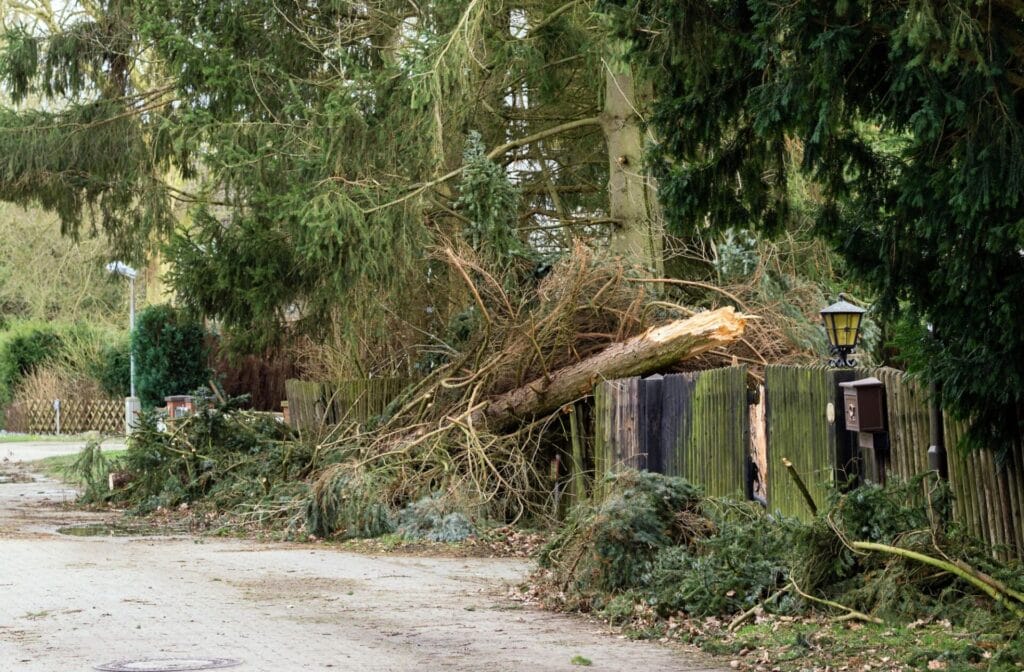
But if a tree needs to be removed as a result of owner neglect, then that owner would be expected to pay for the tree’s removal.
When should a tree be removed?
If it exists, the HOA’s tree policy will include justifiable reasons for removing a tree. These often include:
- The tree is dead, dying, or diseased beyond recovery
- The tree poses a safety hazard to people or property
- Tree roots are damaging sidewalks, driveways, or infrastructure
- The tree is interfering with visibility or access to community features
- The tree was planted without proper approval
It may come as a surprise, but owners will still need to get permission from the HOA to remove a tree from their property, even if the reason for removal is valid.
A written request or architectural application is usually required before removal can proceed. This way, the board can confirm that the work is required, and is in a good position to explain the reason for the removal to anyone who asks about it.
Trees play a big role in curb appeal, property values, and safety. The tree’s removal could affect neighboring yards or sidewalks in a manner unknown to the owner looking to remove the tree. This is just one reason why it is so important to get permission first.
On a final note, most HOAs require a professional to remove the tree to ensure safety and compliance. Don’t try to do a job this big on your own.
Rogue branches: Damage caused by the weather
If your HOA sees its fair share of big wind or ice storms, then it may deal with broken limbs and trunks on an annual basis.
Perhaps you’ve even seen a branch damage a window or roof before. If this happens to you, does the HOA pay?
It depends. If a tree located on HOA property falls and damages a home, fence, or even vehicle, then the HOA’s insurance may cover the cost of repairs. However, if the tree showed visible signs of deterioration and the HOA failed to act, it could be held liable for negligence.
In the case of a neighbor’s tree falling on someone else’s home, both parties should check with their insurance providers. The owner is not typically responsible for a fallen tree unless there was negligence on their part.
Homeowners’ insurance might cover the costs associated with a fallen tree, but the circumstances must be examined.
Conclusion
Trees provide multiple benefits for HOAs and the people who live in them. However, they can also create problems from time to time if owners aren’t clear about who is supposed to maintain them.
Having a tree policy helps to reduce conflicts and surprises regarding trees within the community.