What is a reasonable fine for an HOA violation? If you said, “it depends,” you’re absolutely right.
HOA fine schedules vary depending on the nature and impact of the violation, how many times the rule has been broken, and applicable state laws that regulate fine policies.
But, California HOAs have had to quickly adapt to a new law pertaining to fines. As of July 1, 2025, with a few exceptions, associations can only charge owners a maximum of $100 for breaking a rule.
Keep reading to find out more and how you might be impacted.
Table of contents
- Assembly Bill 130: Why this housing bill also changed the rules for HOA fines
- Are HOAs really limited to $100 fines?
- The pros and cons of limiting HOA fines
Assembly Bill 130: Why this housing bill also changed the rules for HOA fines
In California, more than 50,000 HOAs govern around 65% of the state’s homeowners, reports the California Association of Homeowners Associations.
Of course, owners living in these associations must pay dues or assessments on top of mortgage payments. Average monthly HOA fees are estimated to be just under $300, one of the highest in the nation.
These high fees, coupled with costly homes, due largely to an ongoing affordable housing shortage, have made it very challenging for people to afford the cost of living in California.
Lawmakers passed AB 130 in an effort to make affordable housing easier to build by creating new exemptions from the California Environmental Quality Act for certain housing projects.
However, the $100 fine cap was also included in this bill, with little public notice provided. This decision has sparked a mixed response among owners, HOA boards, and legal experts.
People who support the new law say it will help protect the pocketbooks of middle- and low-income residents.
However, boards worry that the change has weakened their ability to effectively enforce rules. They point out that more violations may occur since the penalty is less severe.
Are HOAs really limited to $100 fines?
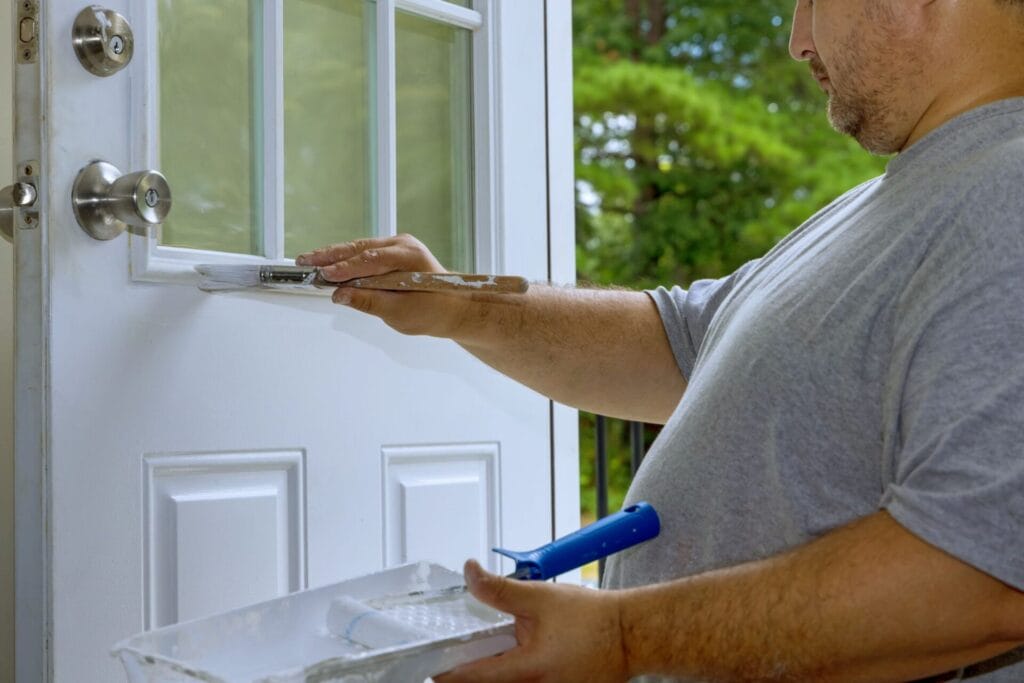
Whether it’s painting the door bright orange, or installing a shed on the front lawn, in most cases, HOAs can only issue a one-time $100 fee to owners who break the rules. Here’s what the law says:
Section 5850 of the Civil Code is amended to read:
5850.(a) If an association adopts, or has adopted a policy imposing any monetary penalty, including any fee, on any association member for a violation of the governing documents, including any monetary penalty relating to the activities of a guest or tenant of the member, the board shall adopt and distribute to each member, in the annual policy statement prepared pursuant to Section 5310, a schedule of the monetary penalties that may be assessed for those violations, which shall be in accordance with authorization for member discipline contained in the governing documents. Monetary penalties shall be reasonable.
(b) Any new or revised monetary penalty that is adopted after complying with subdivision (a) may be included in a supplement that is delivered to the members individually, pursuant to Section 4040.
(c) A monetary penalty for a violation of the governing documents shall not exceed the lesser of the following:
(1) The monetary penalty stated in the schedule of monetary penalties or supplement that is in effect at the time of the violation.
(2) One hundred dollars ($100) per violation.
(d) (1) Notwithstanding subdivision (c), the board may impose a penalty stated in the schedule of monetary penalties or supplement that is in effect at the time of the violation that is greater than one hundred dollars ($100) per violation, if the violation may result in an adverse health or safety impact on the common area or another association member’s property.
(2) Before imposing a penalty on a violation pursuant to this subdivision, the board shall make a written finding specifying the adverse health or safety impact in a board meeting open to the members.
(e) A late charge or interest shall not be charged to a member for a monetary penalty.
(f) An association shall provide a copy of the most recently distributed schedule of monetary penalties, along with any applicable supplements to that schedule, to any member upon request.
To summarize, HOAs can issue a fine of up to $100 unless the violation has an adverse impact on the health or safety of a person or the property.
Determining what is considered “dangerous” or “unsafe” may not be a straightforward process. Moreover, boards must adopt a written finding explaining the risk in a public meeting.
No late fees for delinquent fine payments
Furthermore, HOAs cannot charge late fees or interest in addition to the $100 fine.
Multiple fines can be issued if the same violation is a new problem
It is not possible to escalate fines if the same violation goes uncured. For example, if an owner leaves their garbage can on the curb for three weeks, that is considered an ongoing violation, and additional fines cannot be issued.
However, some attorneys will argue that a noise violation could generate multiple fines, even if it’s for the same problem, because the issue stops and starts again.
As with many laws, there is room for debate about how it should be interpreted and applied.
Communities are always encouraged to seek legal help if they require guidance or clarity.
The pros and cons of limiting HOA fines
Pros
Unfair fines are eliminated
Some California homeowners are delighted that this new fine cap was passed. There are boards out there that have dispensed unfair and egregious fines to retaliate against neighbors whom they simply dislike.
Standardization for fines
The cap also brings some standardization to a penalization system that, at times, may feel arbitrary.
More freedom for owners
It is getting harder to find housing that is not a part of an HOA. Some people reluctantly move into governed communities only because they cannot find a home elsewhere.
Though we don’t encourage anyone to break the rules, people who feel oppressed by their governing documents have more liberty to bend some overly restrictive rules without suffering severe consequences.
Cons
Less incentive to follow the rules
Boards are understandably less happy about this new fee cap because it weakens the HOA’s ability to encourage adherence to community standards, potentially leading to a rise in violations.
Legal action is more likely
The change may also prompt a greater reliance on costly and time-consuming legal action if noncompliance becomes increasingly problematic.
Expenses passed on to owners
Speaking of legal action, the fees associated with hiring an attorney are paid by the association. The new law could actually hurt more owners who don’t break the rules.
Fewer candidates willing to run for a seat on the board
It’s already hard to find owners who want to serve as volunteer board members. This change only adds to that struggle. With limited enforcement powers, governing a community can feel like an uphill battle.
Conclusion
The balance of power between homeowners and HOA boards may be shifting in California. The days of HOAs telling people that their garage doors need to be stone grey, not dove grey, might be over. Many would argue that this kind of change is positive.
However, we will have to wait and see what other impacts this fine cap will have on communities.